
Quick Answer
A hot holding cabinet keeps cooked food at 63°C or above, as UK food hygiene law requires, without continuing to cook it. Dry cabinets suit pastry and pies; humidified cabinets suit chicken, roasts, and rice. Capacity runs 35–186 litres on counter-top units. Expect £400–£900, or £3,600+ for humidity-controlled cabinets.
Caterzone supplies hot holding cabinets and heated display units to UK takeaways, chicken shops, bakeries, carveries, and farm shops, and the specification decision that matters most is not capacity — it is whether the cabinet controls humidity. Get that wrong and you will hold food legally but sell it dried out or gone soft.
This guide covers the 63°C rule and the two-hour display exemption, dry versus humidified holding, sizing by litres and by covers, running costs at UK electricity rates, and how holding cabinets differ from bain maries and heated display counters. Browse the hot holding cabinet range as you go.
What is a hot holding cabinet and how does it differ from a bain marie?
A hot holding cabinet is an insulated, heated enclosure that holds already-cooked food at a safe serving temperature. It is a holding device, not a cooking one: the element is sized to replace heat lost through the walls and door, not to raise the core temperature of cold food. Loading a cabinet with anything below 63°C is both a food safety failure and a misuse of the equipment.
A bain marie holds wet food — sauces, curries, gravy, mashed potato — in gastronorm pans sitting in heated water or over dry heat, open to the air from above. A holding cabinet holds dry or coated food in a closed box: fried chicken, pies, roast joints, jacket potatoes, pastries, plated meals on racks.
The distinction matters because the failure modes are opposite. Food in an open bain marie loses moisture and forms a skin, which is why you cover pans. Food in a sealed cabinet without humidity control retains its own steam, which softens crisp coatings — the reason fried chicken goes limp in a cheap cabinet. Humidified cabinets solve this by holding a controlled moisture level rather than letting the box find its own. If your menu is mostly wet dishes, read our commercial bain marie guide instead.
What does UK law require for hot holding?
The rule is 63°C. Under the Food Safety and Hygiene (England) Regulations 2013 and their equivalents across the UK, food that is being kept hot must be held at 63°C or above, measured in the food itself rather than on the cabinet's display.
There is one documented exemption and it is narrower than most operators think. Food may be held below 63°C for display or service for a single period of up to two hours, after which it must be sold, thrown away, or — if it has not been on display before — chilled to 8°C or below. It is a one-time-only allowance per batch, not a rolling two hours you can reset by moving the tray.
In practice, EHOs look for three things during an inspection: a probe thermometer that is calibrated and in use, temperature records showing hot-hold checks at defined intervals, and a HACCP plan that names hot holding as a critical control point with a corrective action. The corrective action must be specific — "reheat to 82°C or discard" — not "check the cabinet". A cabinet with a digital core-temperature readout and a lockable thermostat makes all three considerably easier to evidence.
Dry or humidified — which cabinet does your menu need?
Choose by the surface of your food. Anything with a crisp coating or pastry crust needs controlled humidity; anything that is already dry or is served sauced does not.
Dry cabinets use a heating element and a fan to circulate warm air. They are simple, cheap, and correct for pies, sausage rolls, pasties, and baked goods where a slightly drier surface is desirable. They are wrong for fried chicken, which loses crust within twenty minutes, and wrong for roast joints, which dry at the cut face.
Humidified cabinets add a water reservoir or steam generator with a controllable humidity setting, typically expressed as a percentage or a simple low/medium/high. Fried chicken holds at high humidity with its crust intact for well over an hour; roast meat holds without a hard crust forming; rice and jacket potatoes hold without going leathery. This is the single biggest quality difference between a £550 cabinet and a £3,600 one, and for a chicken shop it is worth the gap.
Glass-fronted heated display cabinets are a third category: they hold and merchandise at the same time, trading some thermal efficiency for the fact that customers can see the food. For counter-service sites where the display drives impulse sales, that trade is usually worth making.
How do you size a hot holding cabinet?
Counter-top cabinets are quoted in litres, floor-standing units in gastronorm capacity or shelf count. Work backwards from your peak batch, not your daily total.
The method is simple. Take the largest single batch you will ever have waiting at once — a carvery holding two joints and four trays of vegetables, or a chicken shop holding the Friday 6pm cook-ahead — and add 25% headroom so air can actually circulate. Cabinets packed solid hold badly, because a fan cabinet relies on airflow around every item to keep the surface at temperature.
| Capacity | Typical format | Suits | Indicative price |
|---|---|---|---|
| 35 litres | Compact counter-top | Small café, pastry holding, 20–30 covers | ~£400 |
| 50–80 litres | Counter-top | Takeaway, bakery, 40–70 covers | £440–£560 |
| 110–140 litres | Counter-top / drop-in | Busy takeaway, farm shop, 70–120 covers | £550–£880 |
| 186 litres | Large counter-top | High-volume counter service | ~£875 |
| Full-size humidified | Floor-standing, mobile | Chicken shop, carvery, banqueting | £3,600–£6,000 |
A practical rule for counter-service sites: 1 litre of cabinet capacity per cover at peak is a reasonable first estimate for a mixed menu, rising if you hold bulky items like whole chickens or jacket potatoes. Confirm against physical tray dimensions before you buy — a 140-litre cabinet that will not take a 1/1 gastronorm tray is useless to a kitchen that plates on 1/1 gastronorm.
What do hot holding cabinets cost to run in the UK?
Less than most operators expect, because a holding cabinet is thermostatically controlled and spends most of its time idling. A counter-top cabinet typically draws 1–2 kW when the element calls for heat, but averages far less across a service once the box is up to temperature and the door is not being opened constantly.
Take a 1.5 kW cabinet averaging 35% duty over a 10-hour trading day: that is 1.5 × 0.35 × 10 = 5.25 kWh, or about £1.47 a day at 28p/kWh, roughly £430 a year on a six-day week. A humidified full-size cabinet with a steam generator runs higher, but is still a minor line against the food it stops you throwing away.
Door discipline is the biggest single variable. Every opening dumps the heated air and forces a full recovery cycle, so a cabinet on a busy counter with a poorly-sited door can easily double that figure. Specify a cabinet with the door on the service side, keep the seal in good condition, and hold at 68–70°C rather than exactly 63°C so a brief opening does not take the food below the legal threshold. That small margin is the difference between passing a spot check and failing one.
What features are worth paying for?
A digital thermostat with a visible readout is non-negotiable — an analogue dial with no display gives you nothing to record and nothing to show an inspector. Look for a control that displays the actual cabinet temperature rather than only the setpoint.
Humidity control is the next priority if your menu needs it, as covered above. After that: a magnetic door seal that can be replaced without a service call, since seals are the usual failure point; adjustable shelf runners so you can switch between trays and racks; and castors on anything floor-standing, because a cabinet that cannot be moved cannot be cleaned behind.
Stainless steel construction throughout matters for cleaning and for EHO confidence. Check the internal corners are radiused rather than square — square internal corners in a heated, humid box collect debris and are genuinely hard to clean. For glass-fronted display models, look for heated or double-glazed glass, which stops the condensation that otherwise hides your food from the customer within minutes of a busy lunch service.
How should you operate a holding cabinet safely?
Preheat before you load. A cold cabinet loaded with hot food will pull that food through the danger zone while it warms up, which is exactly the situation the 63°C rule exists to prevent. Fifteen to twenty minutes of preheat is typical.
Probe the food, not the air. Cabinet displays report air temperature, and the core of a jacket potato or a roast joint can sit several degrees below that. Probe the thickest part of the largest item, sanitise the probe between foods, and record the reading at set intervals — start of service, mid-service, and end of service is a defensible minimum.
Never use the cabinet to reheat. If food has dropped below 63°C, it must be reheated to 82°C in Scotland or piping hot throughout elsewhere in the UK, using cooking equipment, before it goes back in. Rotate stock strictly first-in-first-out, label batches with the time they went in, and discard anything that has run past its hold window. Clean the interior and the seal daily once the cabinet has cooled, and descale any water reservoir on a humidified unit — limescale in a steam generator is the most common cause of a humidity control failing quietly.
Frequently asked questions
What temperature should a hot holding cabinet be set to?
Food must be held at 63°C or above under UK food hygiene regulations. Set the cabinet to 68–70°C rather than exactly 63°C so that opening the door does not drop the food below the legal threshold. Always verify with a probe in the food itself, because the cabinet display shows air temperature.
How long can food be held below 63°C?
Food may be held below 63°C for display or service for a single period of up to two hours. After that it must be sold, discarded, or chilled to 8°C or below if it has not been displayed before. This is a one-time allowance per batch and cannot be reset by moving the food to another tray.
Do I need a humidified holding cabinet?
You do if you hold fried chicken, roast joints, rice, or jacket potatoes. A dry cabinet lets crisp coatings go soft in their own trapped steam and dries the cut face of roast meat. Pies, pasties, and baked goods hold perfectly well in a dry cabinet and do not justify the extra cost.
What size hot holding cabinet do I need?
Size from your largest single batch waiting at once, plus 25% headroom for airflow. As a starting estimate for counter service, allow roughly 1 litre of capacity per peak cover on a mixed menu. A 50–80 litre counter-top unit suits most takeaways; chicken shops and carveries usually need a full-size humidified cabinet.
How much does it cost to run a hot holding cabinet?
A 1.5 kW counter-top cabinet averaging 35% duty over a 10-hour day uses about 5.25 kWh, roughly £1.47 a day at 28p/kWh, or around £430 a year on a six-day week. Frequent door opening is the main thing that pushes this higher, since each opening triggers a full recovery cycle.
Can I reheat food in a hot holding cabinet?
No. Holding cabinets are sized to maintain temperature, not raise it, so reheating in one drags food slowly through the danger zone. Reheat using cooking equipment to 82°C in Scotland or piping hot throughout elsewhere in the UK, then transfer to the preheated cabinet.
Where to buy hot holding cabinets in the UK
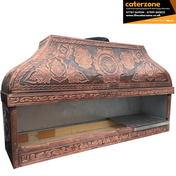
Caterzone stocks hot holding cabinets, heated display units, and humidity-controlled cabinets from counter-top to full-size. Browse the holding cabinet collection and the wider hot display range. For fried chicken and hot food, the refurbished COBOL chicken and hot food holding cabinet at £650 is the value option, while the refurbished Henny Penny SmartHold HHC-990 humidified cabinet at £6,000 is the full-size humidity-controlled choice. For counter-top holding, the Combisteel 80-litre heated display cabinet is £557.90.
To pair holding with the rest of your line, read our commercial bain marie buyer's guide for wet dishes, and our peri peri chicken steamer and steam oven guide for the cook side. For help matching cabinet capacity to your covers, call Caterzone on +44 7787 069044 or email info@thecaterzone.co.uk.