
Quick Answer
A pie cabinet is a heated glass countertop display that holds pies, pasties, and sausage rolls at 63°C or above while merchandising them to customers. UK prices run £304–£711 depending on capacity, with 110L to 370L the common range. Cabinets hold food — they do not reheat it.
Caterzone supplies pie cabinets and hot food display cabinets to UK bakeries, garage forecourts, chip shops, farm shops, and sandwich bars, and the pie cabinet is one of the few pieces of catering equipment that pays for itself through sales rather than savings. Hot food that customers can see sells; hot food behind a kitchen door does not.
This guide explains how heated display cabinets work, the difference between dry and humidified holding, how capacity is measured, the UK 63°C hot-holding rule and the two-hour allowance, electric versus LPG models, and how to size a cabinet against your trade. Browse the pie cabinet and hot display range as you read.
How does a heated pie cabinet work?
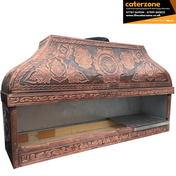
A pie cabinet is an insulated glass-sided box with a heating element, a thermostat, and usually two to five shelves. The element warms the air inside the cabinet, and the thermostat holds it at a set point so that food already at temperature stays at temperature. Most cabinets add interior lighting, because the display job matters as much as the holding job.
Two heating approaches are common. Dry-heat cabinets warm the cabinet air directly and suit pastry — pies, pasties, sausage rolls, and Cornish pasties keep a crisp crust because the atmosphere stays dry. Humidified cabinets add a shallow water tray or steam well to raise humidity, which suits products that dry out and go leathery, such as roast chicken portions, hot dogs, and rice dishes.
Match the cabinet to your product. Put a pasty in a humidified cabinet and the pastry goes soft within the hour; put a chicken portion in a dry cabinet without covering it and it dries out and the appearance suffers. Bakeries and chip shops generally want dry heat; fried chicken and hot deli counters usually want humidity, or a cabinet that lets you choose.
Glass matters too. Double-glazed panels hold heat better, cost less to run, and are far less likely to mist — a misted front is a display cabinet doing the exact opposite of its job.
What size pie cabinet do you need?
Cabinets are quoted by internal volume in litres and by shelf count. Common commercial sizes run from about 110 litres up to 370 litres, with three to five shelves.
Translate that into product. A 110 litre countertop cabinet with three shelves typically holds around 40 to 60 individual pies or pasties depending on size and how they are arranged. A 150 litre cabinet takes roughly 60 to 90. A 370 litre cabinet holds 150 or more and starts to look like a proper forecourt or bakery unit rather than a counter accessory.
Size on peak display, not daily total. The cabinet needs to look full at your busiest hour, because a half-empty hot cabinet reads to customers as end-of-day stock. It also should not be so large that you either overproduce to fill it or serve from a cabinet that looks sparse all afternoon.
Check three physical dimensions before you order: counter depth, because an 86cm wide cabinet at 36cm deep needs 36cm of clear bench plus rear clearance for the vents; height under any overhead shelf; and the plug position, because most of these cabinets are hard to reach behind once loaded. Allow 50mm to 100mm of ventilation clearance around the body unless the manual says otherwise.
Pie cabinet comparison
| Cabinet | Capacity | Best for | Guide price |
|---|---|---|---|
| 4-shelf countertop | Compact, 4 shelves | Sandwich bars, small cafés | £303.95 |
| 5-shelf countertop | 86 x 36 x 62cm | Bakeries with narrow counters | £344.95 |
| 110 litre display | 110L countertop | Chip shops, takeaways | £459.95 |
| 150 litre, 3 shelves | 150L countertop | Busy bakeries, farm shops | £532.95 |
| 370 litre, 3 shelves | 370L countertop | Forecourts, high volume | £710.95 |
| LPG cabinet (refurbished) | Gas heated | Outdoor events, no mains | £665.95 |
What are the UK hot-holding rules for display cabinets?
Hot food on display must be held at 63°C or above. That is the legal standard in England, Wales, and Northern Ireland, and it applies to the food, not to the air temperature the cabinet's dial reports.
UK rules allow one period of up to two hours below 63°C for display purposes, after which the food must be sold, reheated to 63°C or above, or discarded. Many bakeries and forecourts rely on that allowance to run a display window; if you do, you must be able to show when the food went in, and you must apply it once, not repeatedly.
The practical controls are straightforward. Preheat the cabinet for 20 to 30 minutes before loading — putting a hot pie into a cold cabinet drops it below 63°C almost immediately. Load only food that is already at or above 63°C, having been baked or reheated properly (75°C is the standard reheat target in England, Wales, and Northern Ireland; 82°C in Scotland). Probe a sample product with a sanitised probe at the start of service and at intervals, and log it.
Set a discard time and stick to it. Even held correctly at 63°C, pastry quality falls after about four hours, and a cabinet is not a means of extending the life of unsold stock into the next day. Rotate stock front to back, keep raw and ready-to-eat separated at all times, and clean the cabinet — glass, shelves, and the drip tray — daily as part of your HACCP schedule.
PAT test the cabinet annually. If you run an LPG cabinet at events or on a site without a suitable mains supply, the gas installation and any appliance servicing must be handled by a Gas Safe registered engineer, and outdoor use brings its own ventilation requirements.
What does a heated display cabinet cost to run?
Most countertop pie cabinets draw somewhere between 0.6kW and 2kW depending on size, and cycle rather than run continuously once up to temperature. A 150 litre cabinet typically averages perhaps 0.5kW to 0.8kW over a trading day, which is roughly 5kWh to 8kWh across ten hours — about £1.25 to £2 a day at around 25p per kWh.
Three things move that figure. Double glazing meaningfully reduces heat loss compared with single glass. Door discipline matters, as with any heated or cooled cabinet — a serving hatch on the staff side opened briefly costs far less than a full front door swung open. And siting matters: a cabinet in a doorway draught or under an air conditioning outlet works harder all day.
Against that, weigh the sales. A hot cabinet on a forecourt or bakery counter typically sells substantially more pies and sausage rolls than the same product held out of sight, and at a higher price point than cold. The equipment cost is usually recovered in weeks rather than months, which is why the category is so common in UK convenience retail.
Frequently asked questions
How much does a pie cabinet cost in the UK?
UK pie cabinets start at around £304 for a compact four-shelf countertop unit and £345 for a five-shelf model. A 110 litre display cabinet costs around £460, a 150 litre three-shelf around £533, and a 370 litre high-capacity cabinet around £711. Refurbished LPG cabinets for event use cost around £666.
What temperature should a pie cabinet be set to?
Set the cabinet so the food itself holds at 63°C or above, which usually means an air setting comfortably higher. Preheat for 20 to 30 minutes before loading, load only food already at 63°C or above, and check with a sanitised probe rather than relying on the dial. Record readings in your HACCP diary.
Can you reheat pies in a pie cabinet?
No. A pie cabinet is a hot-holding and display unit, not an oven. It cannot bring cold food up through the danger zone quickly enough to be safe, and pastry reheated slowly in a display cabinet goes soft rather than crisp. Bake or reheat to 75°C, then transfer hot to a preheated cabinet.
How long can food stay in a hot display cabinet?
Food held continuously at 63°C or above can remain on display through service, but pastry quality declines noticeably after about four hours. UK rules also permit a single period of up to two hours below 63°C, after which food must be sold, reheated to 63°C or above, or discarded. Set a written discard time and rotate stock.
What is the difference between a dry and humidified hot display cabinet?
A dry cabinet warms the air only and keeps pastry crisp, which suits pies, pasties, and sausage rolls. A humidified cabinet adds a water tray or steam well to stop food drying out, which suits chicken, hot dogs, and rice dishes. Using the wrong one softens pastry or dries out meat within an hour.
Do pie cabinets need special installation?
Electric countertop cabinets generally run on a standard 13A socket, need 50mm to 100mm of ventilation clearance, and should be PAT tested annually. Larger units may need a dedicated circuit — check the data plate. LPG cabinets must be installed and serviced by a Gas Safe registered engineer, with appropriate ventilation for the location.
Where to buy pie cabinets in the UK
Caterzone stocks heated pie cabinets and hot food display units for UK bakeries, forecourts, and takeaways. Browse the pie cabinet and hot display collection, or start with the four-shelf countertop pie cabinet and warmer at £303.95 for a small counter, choose the 110 litre hot food display cabinet at £459.95 for a takeaway, and for a busy bakery or forecourt specify the 150 litre three-shelf hot display cabinet at £532.95 or the 370 litre high-capacity cabinet at £710.95.
For the rest of your hot-holding line, read our hot holding cabinet buyer's guide and our commercial bain marie guide. To size a cabinet against your counter and your peak hour, call Caterzone on +44 7787 069044 or email info@thecaterzone.co.uk.