
Quick Answer
A cake display fridge must hold cream cakes at or below 8°C by UK law, with 2–5°C the practical target. Counters are sold by width: 900mm holds 8–12 whole cakes, 1,800mm holds 20–30. Expect £700–£1,100 countertop and £1,400–£2,100 for a full serve-over counter.
Caterzone supplies cake display fridges and patisserie counters to cafés, bakeries, and delis across the UK, and the counter is doing two jobs at once: keeping cream cake legally cold and making it look worth £4.50 a slice. Get the refrigeration right and the humidity wrong, and you will hold perfect temperature while your sponge dries out by three in the afternoon.
This guide covers temperature and humidity, sizing, lighting, ventilated versus static designs, F-gas obligations, and running costs, so you can choose the right cake display fridge for your counter.
What temperature should a cake display fridge run at?
Cream cakes, cheesecakes, and fresh-cream gateaux are high-risk foods under UK food safety law and must be held at or below 8°C. In practice, aim for 2–5°C, which gives headroom for door openings and a warm shop floor without ever drifting over the legal limit. The 8°C figure is a maximum, not a target, and an EHO probing a counter sitting at 7.8°C on a hot afternoon will not be reassured.
There is a genuine tension with chocolate work. Below about 4°C, chocolate decoration can bloom — the cocoa butter migrates to the surface and dulls the shine — and tempered chocolate loses its snap. If your display is chocolate-heavy, run at the warmer end of the legal range and specify a cabinet with an adjustable digital thermostat rather than a fixed dial. Whatever you set, use a calibrated probe or a logged digital thermometer daily and keep the records; temperature logs are the first thing requested at inspection.
Why do cakes dry out in a display fridge?
Drying is a humidity problem, not a temperature one, and it is the single most common complaint about cake counters. A standard ventilated cabinet uses a fan to blow air across a cold evaporator coil and around the cabinet. That coil runs well below the cabinet air temperature, so moisture from the air condenses onto it and drains away — and the moisture it removes comes out of your unwrapped sponge, buttercream, and cut fruit.
The fix is design, not settings. Cabinets built for patisserie use a physically larger evaporator running at a smaller temperature differential, so they extract the same heat with far less moisture removal, and many add gentle humidification. Static or gravity-cooled cabinets hold humidity better still but cool more slowly and less evenly, which limits them to lighter-duty use. If you display unwrapped cakes, specify a high-humidity patisserie cabinet and accept the price difference — the alternative is discounting dried-out stock every evening.
What size cake display counter do you need?
Cake counters are sold by width in standard steps, and capacity scales roughly with that width across three shelves:
- 900mm — displays 8–12 whole cakes across three shelves. Suits a small café or a coffee shop where cake is a secondary line. The 900mm cake display counter is the standard entry specification.
- 1,200mm — holds 12–18 whole cakes. The typical independent bakery or busy café size.
- 1,500mm — 16–24 cakes, suited to a dedicated patisserie or a deli with a strong cake trade.
- 1,800mm — 20–30 cakes. A serious display for a bakery or a high-footfall site, as with the 1,800mm cake display counter.
The important discipline is not buying more width than you can keep full. A half-empty 1,800mm counter reads as picked-over and stale, and it actively reduces sales compared with a well-stocked 1,200mm. Size to what you can fill at 4pm, not what you can fill at 9am. Rotating and round display cases such as the 360-litre round cake display case occupy a different niche — high visual impact in a small footprint, ideal beside a till.
Cake display cabinet types compared
| Type | Capacity | Humidity | UK price | Best for |
|---|---|---|---|---|
| Countertop display | 4–8 cakes | Moderate | £700–£1,100 | Small cafés, tight counters |
| 900mm serve-over counter | 8–12 cakes | Good | £1,300–£1,600 | Cafés and coffee shops |
| 1,200–1,500mm counter | 12–24 cakes | Good | £1,600–£2,000 | Bakeries, delis |
| 1,800mm counter | 20–30 cakes | Good | £2,000–£2,400 | High-footfall patisserie |
| Round / rotating case | 8–16 cakes | Variable | £1,200–£2,800 | Visual impact, impulse sales |
| Refurbished counter | Varies | Varies | £700–£1,200 | First fit-out on a budget |
What lighting is best for a cake display?
Warm-white LED at around 3,000K flatters sponge, cream, and chocolate. Cold blue-white light at 5,000K and above makes buttercream look grey and fondant look plastic — it is the fastest way to make good cake look cheap, and it is a surprisingly common specification error on budget cabinets.
Light every shelf, not just the top one. A single top-mounted strip leaves the lower two shelves in shadow, and customers buy what they can see, so your bottom shelf becomes dead stock. LED is the right technology beyond colour temperature too: it runs cool, so it does not fight the refrigeration the way old fluorescent or halogen strips did, and it draws a fraction of the power.
Finally, glass condition matters more than most operators accept. Fingerprints, smears, and condensation on the front glass cost more sales than pricing does. Specify double-glazed or heated front glass if your site is humid, and build glass cleaning into the opening routine rather than the closing one.
F-gas, servicing and UK compliance
Commercial refrigeration in the UK falls under the F-gas Regulations. Any work on the refrigerant circuit — installation, repair, decommissioning — must be carried out by an F-gas certified engineer, and you must keep records. Cabinets with a refrigerant charge at or above 5 tonnes CO2 equivalent require documented leak checks at least every twelve months; most single cake counters sit below that threshold, but you still need to be able to show the unit has been serviced and that any engineer who worked on it was certified.
Newer cabinets increasingly use R290 (propane) as a refrigerant. It is efficient and has a very low global warming potential, which is why it is displacing older HFCs, but it is flammable, so charge sizes are limited and ventilation clearances around the condenser must be respected. Do not box an R290 counter tightly into a joinery run without checking the manufacturer's clearance figures.
Beyond F-gas, the everyday obligations are the familiar ones: daily temperature logs, 8°C maximum for high-risk chilled food, condenser coils cleaned on a schedule — a blocked condenser is the leading cause of a cabinet that cannot hold temperature in summer — and annual PAT testing for plug-in units.
How much does a cake display fridge cost in the UK?
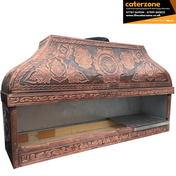
Countertop cake displays cost around £700–£1,100. Full serve-over cake counters run from about £1,400 for a 900mm unit to £2,100 or more for 1,800mm. Round and rotating cases sit at £1,200–£2,800 depending on capacity and whether the case rotates. Refurbished cabinets, such as this refurbished 2–10°C cake display fridge, offer a substantial saving on a first café fit-out.
Running cost is modest but not trivial. A typical 900–1,200mm cake counter draws roughly 0.3–0.6kW averaged over 24 hours, which is about 7–14kWh a day, or £2–£4 at around 28p/kWh — call it £700–£1,400 a year running continuously. Two things move that figure materially: a clean condenser, and whether the cabinet sits in direct sunlight or next to an oven. Positioning a counter away from heat sources is free and can cut consumption noticeably.
Frequently asked questions
What temperature should a cake display fridge run at?
Cream cakes, cheesecakes, and fresh-cream gateaux must be held at or below 8°C under UK food safety law, with 2–5°C the practical target. Chocolate work prefers the warmer end, because below about 4°C chocolate can bloom and lose its shine. Choose a cabinet with an adjustable digital thermostat.
Why do cakes dry out in a display fridge?
Drying is a humidity problem, not a temperature one. Ventilated cabinets with strong fan circulation strip moisture from unwrapped sponge and buttercream, while designs with a larger evaporator running at a smaller temperature differential hold humidity far better. For unwrapped patisserie, specify a high-humidity cabinet.
What size cake display counter do I need?
Cake counters come in 900mm, 1,200mm, 1,500mm, and 1,800mm widths. A 900mm displays 8–12 whole cakes across three shelves, 1,200mm holds 12–18, and 1,800mm holds 20–30. Do not buy more width than you can keep full — a half-empty display reads as stale and reduces sales.
How much does a cake display fridge cost in the UK?
Countertop cake displays cost around £700–£1,100. Full serve-over cake counters run from about £1,400 for a 900mm unit to £2,100+ for 1,800mm. Round and rotating cases cost £1,200–£2,800. Refurbished cabinets offer a substantial saving for a first café fit-out.
What lighting is best for a cake display?
Warm-white LED at around 3,000K flatters sponge, cream, and chocolate, while cold blue-white light makes cake look grey. Light every shelf rather than just the top one, and keep the glass spotless. LED also runs cool, so it does not fight the refrigeration.
Where to buy cake display fridges in the UK
Caterzone stocks cake display fridges and patisserie counters from countertop units to 1,800mm serve-over counters. Browse the cake display collection, or consider the 900mm cake counter for a café, the 1,800mm counter for a bakery, or the 360-litre round display case where counter space is tight.
For the rest of your chilled display, read our serve-over and deli display fridge guide, and our refrigerated prep counter and saladette guide for back-of-house chilled storage. For help sizing a counter to your footfall, call Caterzone on +44 7787 069044 or email info@thecaterzone.co.uk.
Looking to buy? Shop our range
Browse Cake Display Fridges at Caterzone — UK trade prices, fast delivery, and expert support. Call +44 7787 069044 or email info@thecaterzone.co.uk.