
Quick Answer
A commercial chicken rotisserie roasts whole birds on rotating spits or in baskets in front of radiant gas or electric heat. UK prices run from about £810 for a refurbished 9–12 bird unit to £1,800–£2,500 for new 2–3 spit models holding 8–15 chickens, and around £3,400 for a 16–20 bird basket rotisserie.
Caterzone supplies commercial chicken rotisseries to UK butchers, delis, farm shops, takeaways, Portuguese and Middle Eastern grills, and convenience stores, and the rotisserie is one of the few cooking appliances that sells its own product. A window full of turning, golden chickens draws customers in from the street in a way no menu board can.
This guide covers how rotisseries work, spits versus baskets, gas versus electric, sizing against daily sales, cooking times and UK food safety rules, hot holding, installation, and the economics of selling rotisserie chicken. Specific rotisseries are linked throughout, and the commercial oven collection covers the convection oven with rotisserie function and the rest of the cooking range.
How does a commercial chicken rotisserie work?
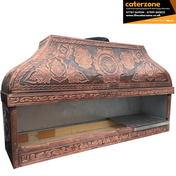
A commercial rotisserie is a glass-fronted cabinet with radiant heating elements or gas burners along the back or top and two or more motor-driven spits that turn the birds slowly in front of the heat. As each chicken rotates, every surface passes through the hottest zone in turn, so the skin crisps and browns evenly while fat renders out and bastes the bird as it turns.
The fat drips into a removable tray or drawer at the base, which keeps the birds out of their own drippings and stops the cabinet filling with smoke. Combisteel gas rotisseries, for example, have a slide-out grease tray and a large fat collection drawer, and each spit has its own motor, so one jammed spit does not stop the whole cabinet.
The glass door matters too. It reduces heat loss, which cuts energy use, and it turns the cabinet into a display. Most models include interior lighting, because a rotisserie in a shop window is doing a sales job as well as a cooking job.
Spits or baskets: which rotisserie should you choose?
Spit rotisseries skewer whole birds on long rods, usually with claw spits that grip each chicken. They are the classic format and give the best results for whole chickens: the bird is held firmly, browns evenly, and looks exactly as customers expect in the window. Combisteel's 2-spit and 3-spit gas and electric models each hold around four to five 1.5kg to 1.7kg chickens per spit.
Basket rotisseries hold food in rotating wire baskets instead of skewers. The Combisteel 4-basket electric rotisserie holds 16 to 20 chickens, and baskets are far more flexible: they take whole birds, halves, quarters, wings, drumsticks, ribs, sausages, and roast vegetables, and they are quicker to load because nothing needs skewering. A separate rotisserie basket is also available for spit models at around £400.
Choose spits if you sell whole chickens and want the traditional window display. Choose baskets if you sell portions, wings, and mixed menus, or if speed of loading matters more than appearance. Many shops with spit rotisseries keep one basket for wings and portions.
Gas or electric rotisserie?
Electric rotisseries are the usual choice for shops, delis, and supermarkets. They are simple to install where there is no gas supply, need no flue or gas interlock, and are easy to clean. The trade-off is power: the Combisteel 2-spit electric rotisserie draws 5.2kW, the 3-spit 7.8kW, and the 4-basket model 5.4kW. These loads normally need a dedicated circuit, and larger models may need three-phase power, so check the data plate with your electrician before ordering.
Gas rotisseries suit kitchens and takeaways that already run gas cooking lines under an extraction canopy. They heat up quickly, have strong radiant burners for good skin colour, and are often cheaper to run per hour because commercial gas costs much less per kWh than electricity. Combisteel's 2-spit gas model has a ½-inch gas connection, independently controlled heat zones, high and low settings, and a flame failure device that shuts off the gas if a burner goes out.
A gas rotisserie must be installed and commissioned by a Gas Safe registered engineer and connected to the kitchen's gas interlock and extraction under BS 6173. Electric rotisseries still produce grease-laden vapour, so position them under extraction wherever you can, particularly if they run all day.
Chicken rotisserie comparison
| Rotisserie | Capacity | Power / fuel | Best for | Guide price |
|---|---|---|---|---|
| Roller Grill electric (refurbished) | 9–12 chickens | Electric, 76 x 51 x 84cm | Testing demand, small shops | £807.95 |
| Combisteel 2-spit electric | 8–10 chickens | 5.2kW, 1,320mm wide | Delis, butchers, farm shops | £1,794.90 |
| Combisteel 2-spit gas | 8–10 chickens | Gas, ½" supply, flame failure | Takeaways with gas lines | £1,977.90 |
| Combisteel 3-spit electric | 12–15 chickens | 7.8kW, 1,320mm wide | Busy shops, chicken specialists | £2,465.90 |
| Combisteel 3-spit gas | 12–15 chickens | Gas | High-volume grills | £2,508.90 |
| Combisteel 4-basket electric | 16–20 chickens | 5.4kW, 940mm wide | Portions, wings, mixed menus | £3,383.90 |
What size rotisserie do you need?
Size a rotisserie on your peak hourly sales, not your daily total. A 1.5kg chicken typically takes around 60 to 75 minutes to roast on a rotisserie, depending on the model, the size of the bird, and how hot the cabinet is when loaded. That means each load of a 2-spit cabinet produces 8 to 10 birds an hour, a 3-spit 12 to 15, and a 4-basket model 16 to 20.
Work backwards from demand. A deli selling 30 chickens across a day, with a lunch and teatime peak, can run comfortably from a 2-spit cabinet loaded three or four times. A shop selling 60 or more, or a takeaway with a strong Friday and Saturday evening peak, needs a 3-spit or basket model, or two cabinets so one can be cooking while the other is selling.
Check the space before choosing. Combisteel's spit rotisseries are 1,320mm wide and 460mm deep, so they need a solid counter or a dedicated stand, plus clearance either side for ventilation and loading. The 4-basket model is narrower at 940mm but deeper at 590mm. Allow for the weight too — 65kg to 85kg before the chickens go in.
What are the UK food safety rules for rotisserie chicken?
Whole chicken must be cooked until the thickest part of the thigh and breast reaches a core temperature of 75°C, or an equivalent time and temperature such as 70°C for two minutes, as set out in your HACCP plan. Check with a sanitised probe on several birds in every load, not just one, because birds on the end of a spit can cook more slowly than those in the middle. Juices should run clear and there should be no pink meat near the bone.
Raw and cooked handling is the biggest risk. Loading raw birds onto spits and unloading cooked ones uses the same equipment, so use separate tongs, gloves, and boards for raw and cooked, wash and sanitise spits between loads, and never put cooked chicken back on a surface that held raw chicken. Your EHO will look closely at how this is managed.
Once cooked, chicken for sale must be held at 63°C or above. Many shops keep birds turning on the spits with the heat lowered, or move them into a heated display or hot holding cabinet. UK rules allow a single period of up to two hours below 63°C for display, after which unsold chicken must be sold, reheated to 63°C, or discarded. Set a written discard time; rotisserie chicken loses quality after about three to four hours. Our hot holding cabinet guide covers display units.
Is a rotisserie profitable for a UK shop?
Rotisserie chicken is one of the better margins in food retail. A fresh 1.5kg whole chicken might cost a shop roughly £3.50 to £4.50 at trade prices in the UK, plus seasoning and packaging, and commonly sells hot for £9 to £12 depending on location. That margin, combined with the window-display effect that lifts sales of sides, drinks, and bread, is why so many butchers, delis, and convenience stores install one.
Running costs are modest by comparison. A 5.2kW electric 2-spit cabinet running at around two-thirds of its rated power uses roughly 3.5kWh an hour — about 85p to 90p an hour at 25p per kWh — so a full ten-bird load costs well under £1 in electricity. Waste is the cost to manage: overproduce and you discard birds at the end of the holding window. Cook to demand, load in smaller batches during quiet periods, and turn unsold cooked chicken into chilled products such as sandwiches only if it was cooled correctly and your HACCP plan allows it.
If you already run a chicken shop, compare with other ways of cooking the same product. Our peri peri chicken steamer guide explains the steam-then-grill method many peri peri shops use instead of a rotisserie.
Frequently asked questions
How much does a commercial chicken rotisserie cost in the UK?
Refurbished rotisseries start at around £808 for a Roller Grill 9–12 bird unit. New Combisteel models cost about £1,795 for a 2-spit electric, £1,978 for a 2-spit gas, £2,466 to £2,509 for 3-spit models holding 12–15 chickens, and £3,384 for a 4-basket electric holding 16–20 chickens.
How long does a chicken take in a commercial rotisserie?
A 1.5kg whole chicken usually takes around 60 to 75 minutes, depending on the rotisserie, bird size, and starting temperature. Always confirm with a probe thermometer that the thickest part has reached 75°C at the core, or an equivalent time and temperature in your HACCP plan.
Do I need a Gas Safe engineer for a gas rotisserie?
Yes. A gas rotisserie in a UK commercial setting must be installed and commissioned by a Gas Safe registered engineer, have a flame failure device, and be connected to the gas interlock and extraction system under BS 6173. Electric models need a suitable dedicated circuit instead.
Are spit or basket rotisseries better?
Spits give the best results and display for whole chickens. Baskets are more flexible — they cook halves, portions, wings, ribs, and vegetables — and are quicker to load. Choose spits for a traditional whole-chicken window; choose baskets for mixed menus and portions.
How long can rotisserie chicken be kept hot?
Cooked chicken held at 63°C or above can stay on sale through service, but quality falls after about three to four hours. UK rules also allow a single period of up to two hours below 63°C for display, after which it must be sold, reheated to 63°C, or discarded.
Does a rotisserie need extraction?
Gas rotisseries must sit under extraction with a gas interlock. Electric rotisseries do not need a gas interlock, but they produce grease-laden vapour, so extraction is strongly advisable, especially for all-day use. Check with your local authority and landlord if you are installing one in a shop unit.
Where to buy a chicken rotisserie in the UK
Caterzone supplies new Combisteel rotisseries and refurbished models from our Northampton base. Choose the Combisteel 2-spit electric rotisserie for 8–10 chickens at £1,794.90, the 3-spit electric rotisserie for 12–15 chickens at £2,465.90, or the 2-spit gas rotisserie with flame failure device at £1,977.90. To test demand before investing, the refurbished Roller Grill 9–12 bird rotisserie is £807.95. The commercial oven collection covers the rest of your cooking range.
For more on chicken shop equipment, read our Henny Penny pressure fryer guide and our peri peri chicken steamer guide. For help sizing a rotisserie against your sales, call Caterzone on +44 7787 069044 or email info@thecaterzone.co.uk.